 Goalora
Trail Running/Walking
intermediate · locomotion
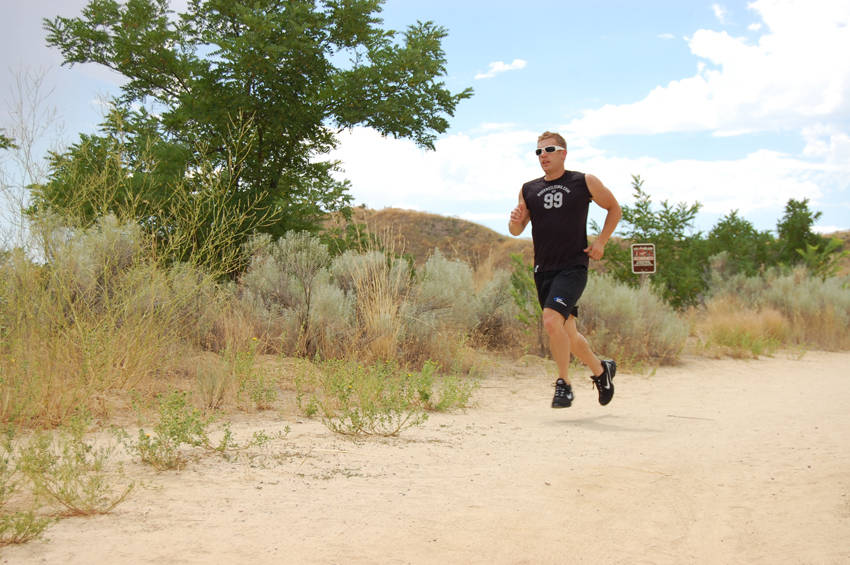
Setup
Wear shoes with good grip for uneven terrain. In hot, humid weather go early morning or late afternoon, carry water, and let someone know your planned route.
Execution
- Start with 5 minutes of brisk walking on flat ground to warm up the joints.
- On uphill sections, shorten your stride and switch to walking if running makes your breathing too labored.
- On downhill sections, keep the steps short and controlled, without letting momentum carry you down too fast.
- Continuously scan the ground ahead to avoid rocks, roots or slippery patches.
- Aim for 30-40 minutes of continuous movement in the main block, not counting the 5-minute walking warm-up; the uphill sections you walk still count toward that time.
- Finish with a few minutes of slow walking on flat ground to bring your heart rate down.
Breathing
Breathe steadily with your steps, slowing down on climbs to keep your breathing controlled. Chest pain, dizziness or unusual shortness of breath means stopping and seeing a doctor.
Quick cues
- Eyes always scanning the ground ahead.
- Shorten the stride on climbs and descents.
- Slow down rather than push hard uphill.
- Carry enough water for the whole route.
Common faults
Fault: Running at flat-ground pace on an uphill climb
Fix: Switch to a brisk walk on the climb rather than forcing a running pace.
Fault: Letting momentum carry you too fast downhill
Fix: Shorten the stride and actively control the speed on the descent.
Fault: Not watching the ground, looking off into the distance instead
Fix: Continuously scan a few meters ahead to spot obstacles.
Fault: Going alone into a remote area without telling anyone
Fix: Always tell someone your route and expected return time.
Equipment
bodyweight
Muscle groups
legs, calves, glutes, cardio