 Goalora
Stationary Bicycling
beginner · locomotion
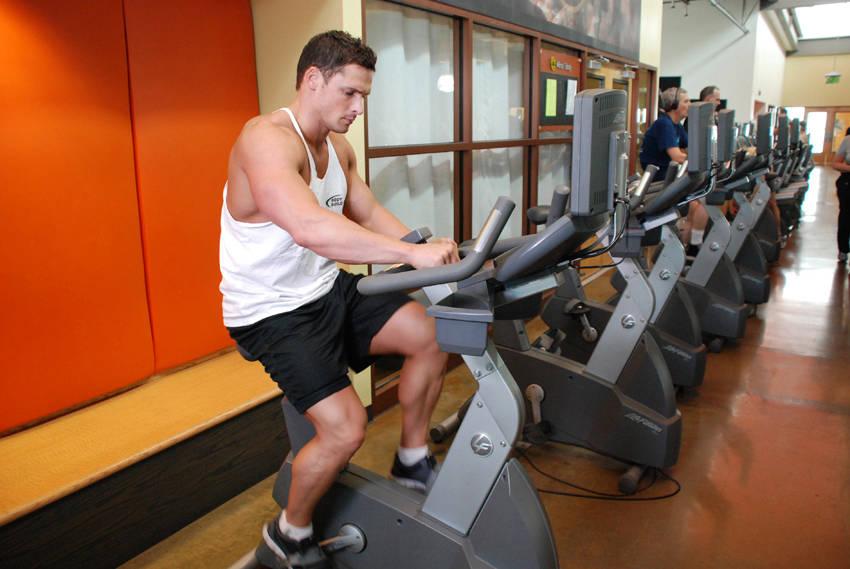
Setup
Adjust the seat so your knee still has a slight bend when the pedal is at its lowest point. Select a light starting resistance on the bike's display.
Execution
- Pedal easily for 3-5 minutes to warm up the knees and hips.
- Gradually increase the resistance or speed until you can still speak in full sentences but your breathing has picked up.
- Keep your back naturally straight, shoulders relaxed, with just a light rest of the hands on the handlebars.
- Hold a steady pedaling cadence for the planned duration of the session.
- A beginner aims for 20-30 minutes of continuous pedaling at a pace where full sentences still come out, not counting the 3-5 minute warm-up and the 3-5 minutes of easy pedaling at the end.
- Finish with 3-5 minutes of easy pedaling to bring your heart rate down before stopping completely.
Breathing
Breathe steadily in rhythm with your pedaling, never holding your breath. Chest tightness, dizziness or unusual shortness of breath means stopping and resting.
Quick cues
- Slight bend in the knee at the bottom.
- Full sentences means the right pace.
- Shoulders loose, light hands on the bars.
- Keep a steady cadence the whole session.
Common faults
Fault: The seat set too low, so the knee bends deeply on every pedal stroke
Fix: Raise the seat until the knee has only a slight bend at the bottom of the pedal stroke.
Fault: Tensing the shoulders and leaning hard on the handlebars
Fix: Relax the shoulders and let most of the weight rest on the saddle.
Fault: Starting at too high a resistance and having to stop partway through
Fix: Start light and build the resistance gradually after a few warm-up minutes.
Fault: The knees caving inward while pedaling
Fix: Check that the pedals line up with the toes and drive the knees in that same direction.
Equipment
bike
Muscle groups
legs, calves, glutes, cardio