 Goalora
Bear Crawl Sled Drag
intermediate · locomotion
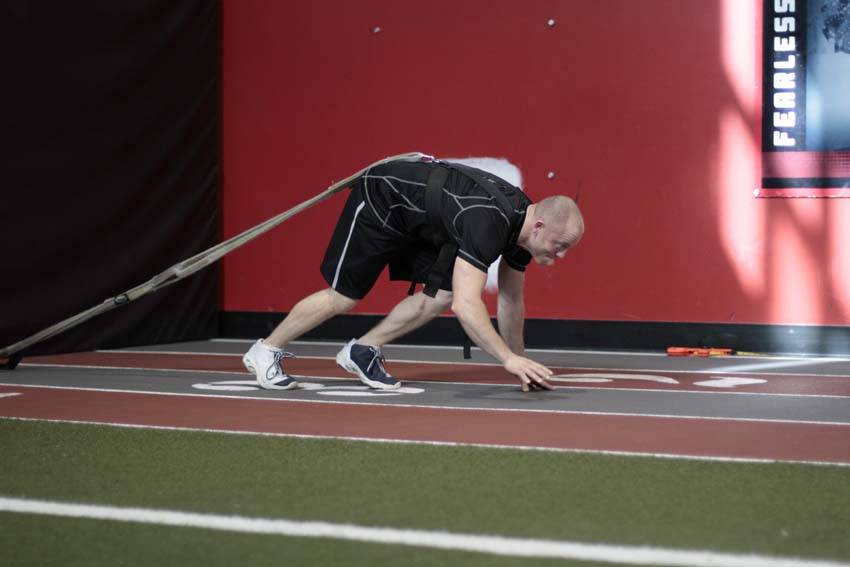
Setup
Buckle a harness around your waist and clip it to a lightly loaded sled behind you, then get down on your hands and feet facing away from the sled.
Execution
- Buckle a harness around your waist and clip it to a lightly loaded sled behind you.
- Get down on your hands and feet, knees hovering just off the floor, back flat like a tabletop.
- Crawl forward by moving opposite hand and foot together, keeping your hips level.
- Keep your head in line with your spine, looking a short distance ahead rather than straight down.
- Breathe continuously as you crawl, exhaling as each hand reaches forward.
- One trip is 10-15 meters, about 20-30 seconds of continuous crawling, with 90 seconds of rest before the next; once the hips start rocking side to side, that trip is over.
- Cover the planned distance, then unclip and rest before the next set.
- If your wrists or lower back start to complain, drop to a lighter sled load or shorten the distance.
Breathing
Breathe continuously as you crawl, exhaling as each hand reaches forward. Do not hold your breath even when the sled feels heavy.
Quick cues
- Back flat like a tabletop.
- Opposite hand and foot together.
- Knees hover, never touch down.
- Eyes a short distance ahead.
- Start light, add load later.
Common faults
Fault: The hips piking up high instead of staying level with the shoulders
Fix: Shorten the reach of each step and cue the hips down to shoulder height.
Fault: Knees dragging on the floor the whole time
Fix: Brace the core more and lighten the sled until the knees can hover.
Fault: Holding the breath while concentrating on the crawl pattern
Fix: Count out loud on each step to keep the breathing going.
Fault: The sled too heavy, wrecking the crawl pattern into a stumble
Fix: Strip weight until the hand-foot rhythm stays clean.
Equipment
sled
Muscle groups
legs, calves, glutes, core, shoulders